
She just smiled and gave me a Vegemite sandwich!
The Turkish toast looked dubious. Among the slightly browned crevices pooled with butter, gathered substantial globs of the brown swamp residue looking Vegemite. Because I was so eager to embrace Australia (I had a kangaroo burger later that day), I ignored the fact that I really wanted to gag after taking a bite. Certainly, my tongue swirled and retracted inside of my mouth. The most beloved product in Australia tasted like congealed soy sauce.
In high school, I was a huge Men at Work fan. So, of course, on my first day after moving to Australia, I had to have the Vegemite sandwich that Men at Work so proudly touted in the song “Down Under.” At a small cafe in Manly Beach, Sydney, my husband, Kurt, our kids and I ordered our first “brekkie” in Oz.
With more enthusiasm than necessary (jet lag), I asked for Turkish toast topped with Vegemite. After I revealed to the cashier that I had never had this classic Aussie product, the cashier said she, too, was new to Vegemite since she had moved from Brazil just two months ago. Then she admitted that she hated the Aussie spread, but she suggested that I might like it.
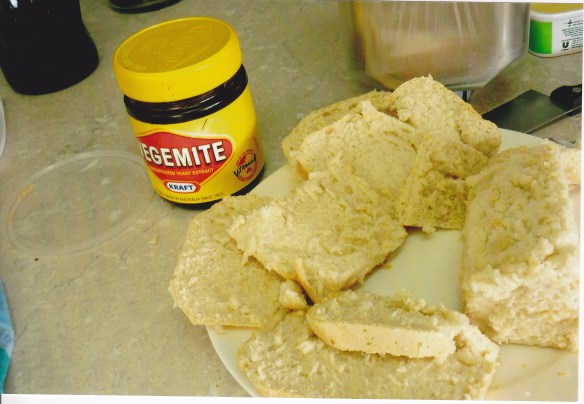
Home-baked, fresh bread — a must for Vegemite
I made it through half the sandwich before concluding — “Okay, enough. I’ve given it a go.” Truthfully, it was hard to believe Vegemite was Aussie comfort food. After all, it is Australia’s equivalent to peanut butter. In fact, some babies are weened off the breast straight to Vegemite.
After leaving Sydney and arriving in Adelaide, South Australia, to work as an exchange teacher, I was confronted with the reality of Vegemite regularly. The yellow jars are ubiquitous. While camping in the Flinders Range of South Australia, Kurt, the kids and I even encountered people who not only brought the familiar jar of concentrated yeast extract, but also they slathered it on their pancakes. Yikes!
The product really isn’t marketed properly either. It’s officially considered “concentrated yeast extract” on the label. Kraft Foods, which produces Vegemite, couldn’t even change it to “Australia’s favourite spread!” or something more zippy. Plus instead of the brackish brown color, perhaps they could make it pink and throw in some rainbow sprinkles.
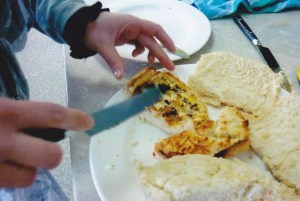
Have heaps of butter and then spread — a thin layer
However, it’s beloved as is — basically beer film with lots of vitamin B. Aussies will always tell you how soldiers during World War II ate it to stay healthy. It was also marketed to mums in the 1950s as a vitamin packed snack for kids.
Meanwhile, my students and colleagues at the Adelaide school where I taught thought it was a travesty that I had not been introduced to Vegemite properly. My fellow teachers said, of course, I wouldn’t like it when it was presented as big blobs on toast. There was technique to spreading Vegemite.

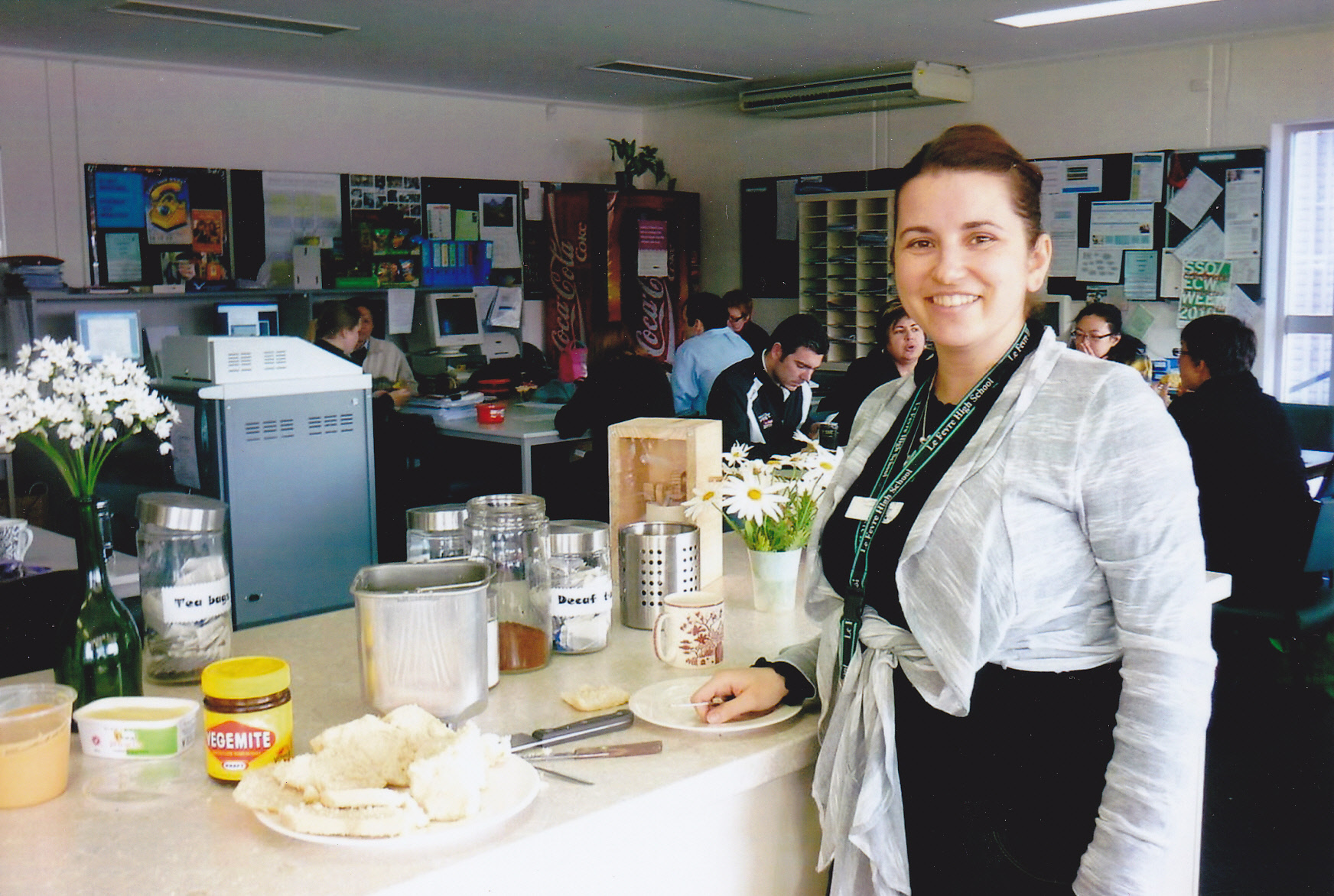
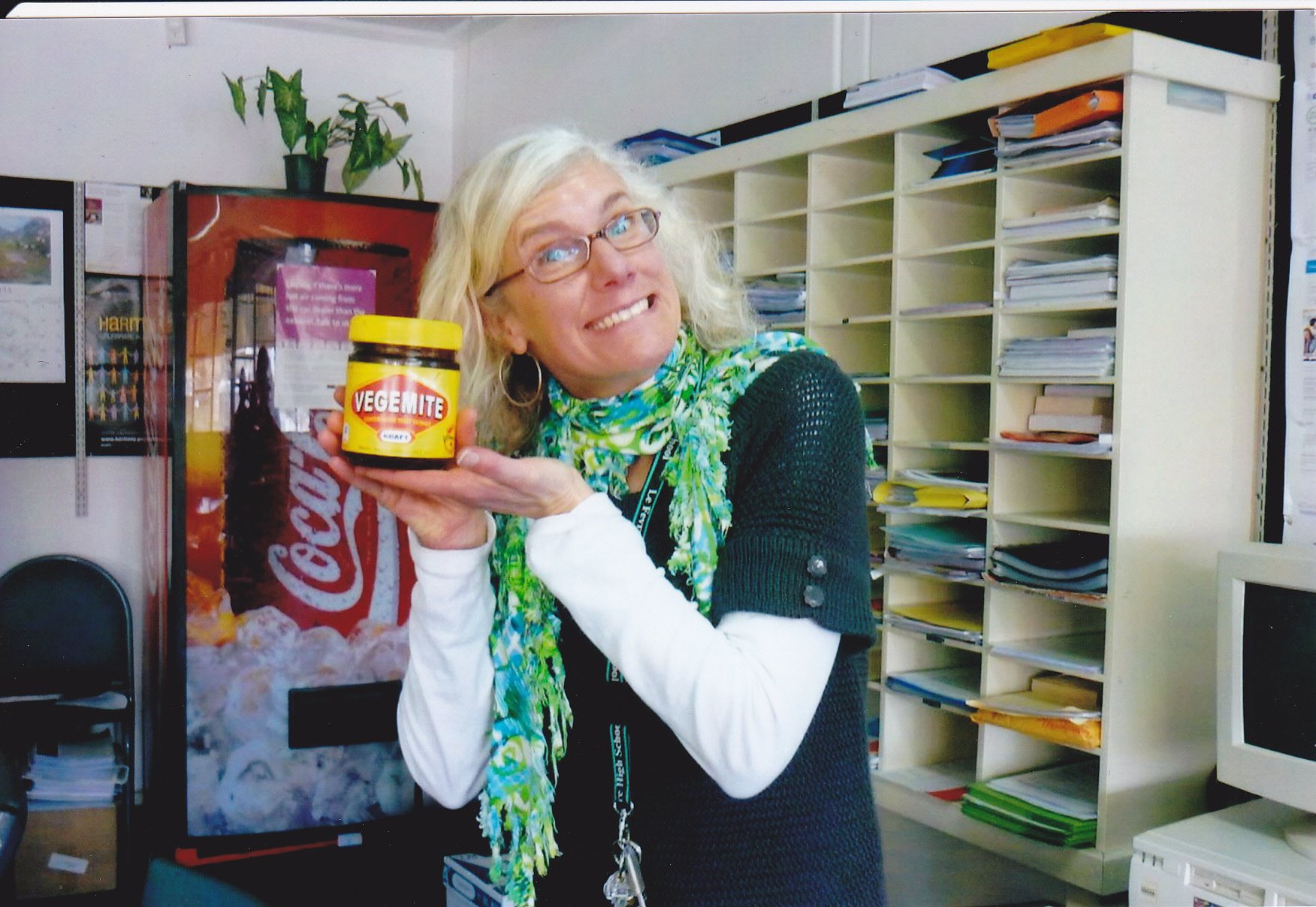
Nadine with everything she needs to convince me of the wonder of Vegemite.
My friend Kylie said I must scrape it on with the back of the knife in a thin layer. Another friend, Nadine said I needed to top it on warm, freshly made bread over “heaps of butter.”
My friend Amy, on the other hand, said to skip it. She was one of the few Aussies who didn’t like Vegemite (she’s also half American). Because I seemed skeptical, they arranged a Vegemite tasting in the staff lounge.
A bread maker arrived at school along with farm fresh butter, cream cheese, and even freshly crushed natural peanut butter (or “peanut paste” as many Aussies call it) that my friend Anne brought in my honor. Everyone was into converting the Yank.
Finally, after trying several different thicknesses and primer coatings of butter, cream cheese and peanut paste, I decided that with enough butter, Vegemite on fresh, warm bread was pretty good. Although I might not be a full on Vegemite fan, I can tolerate it, which is saying quite a bit. And now that I’m back in the US, when I miss Oz, I have a tube of Vegemite, and I actually quite enjoy it on a piece of sourdough toast — with heaps of butter.
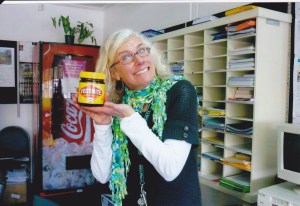
Vegemite — Yank approved





 Travel Oops