The Travel Oops Interview (The Rickshaw Wreck)

For a Westerner, India seems ready made for a Travel Oops. Certainly, at the very least, visitors, inevitably, encounter the unexpected.

Jane Whitmer, a program manager who teachers a Nurturing Parenting class for the Family and Youth Initiative in Salida, CO, says her travel mantra is “Be open to the Possibilities.”

With that attitude, she traveled to India in the summer of 2012, and at one point, she even told one of her traveling companions, “You’re in for a ride now, Helen. This is India.”

A seasoned traveler, Whitmer had wanted to visit India for the past 10 years. After arriving there in June, her adventures included having a cobra rest on her head; meditating and doing yoga at an ashram; staying at a rickshaw driver and his family’s house; walking on a back road that included obstacles like irrigation channels, barbed wire fences and bulldozers; and riding on a bus that traveled via a one-lane road over an 18,000 ft. mountain pass — just to name a few.

Continue reading

Hiking the “Mountain Goat Gauntlet” in Colorado

The trail meant only for hooves.
© Stephanie Glaser

As I looked back at the mountainside “trail” I had just clung to and shimmied along, I decided that it was meant only for hooves — either hooves of mountain goats or hooves of some demonic creature. This was the “Hike to Hell.” At certain points, the path just blended in with the crags and ridges of the mountain and appeared to be completely sheer.

While making my way, I hugged any jutting rock cluster, trying to ignore the fact that when small rocks became dislodged and fell, you did not hear them land. Occasionally, you would hear one skitter down the side for a few feet and then there was nothing but silence.

Continue reading

The Travel Oops Interview

Introducing Travel Oops’s new feature: The Travel Oops Interview.

Ed and Judy Schuck, my parents.

Forty years ago this year, Judy Schuck, who happens to be my mom and a prominent figure in Travel Oops, traveled with my dad, Ed, and friends of theirs, Audrey and Harry, to Bulgaria during the Cold War. Engineers for Medtronic, Ed and Harry had been invited to attend a medical conference in Sophia, Bulgaria.

The reminder of Communism was ever present and the feeling of being watched was very real. However, according to Judy, the Bulgarians were lovely people. Ultimately, politics again entered the scene because when the Schucks were leaving Bulgaria, it was right after the tragic shootings at the Munich Olympics. Their flight back to the United States was detained because the pilots of the plane were not going to fly through Syrian airspace.  That, however, was just one of the mishaps.

Where was one of your most memorable Travel Oops?

Bulgaria in 1972.

What happened in Bulgaria?

© Audrey Friedman

This was 1972 and although they were letting tourists in, Bulgaria was still in control of the Communists and the government. And to get there from Yugoslavia, we took the Orient Express. It was the worst [train] you could imagine and the only difference between first class, which we paid for, and coach was that in first class, you had cushions and pads on the wooden benches.

Continue reading

“Tossing cookies” into a Dutch Canal

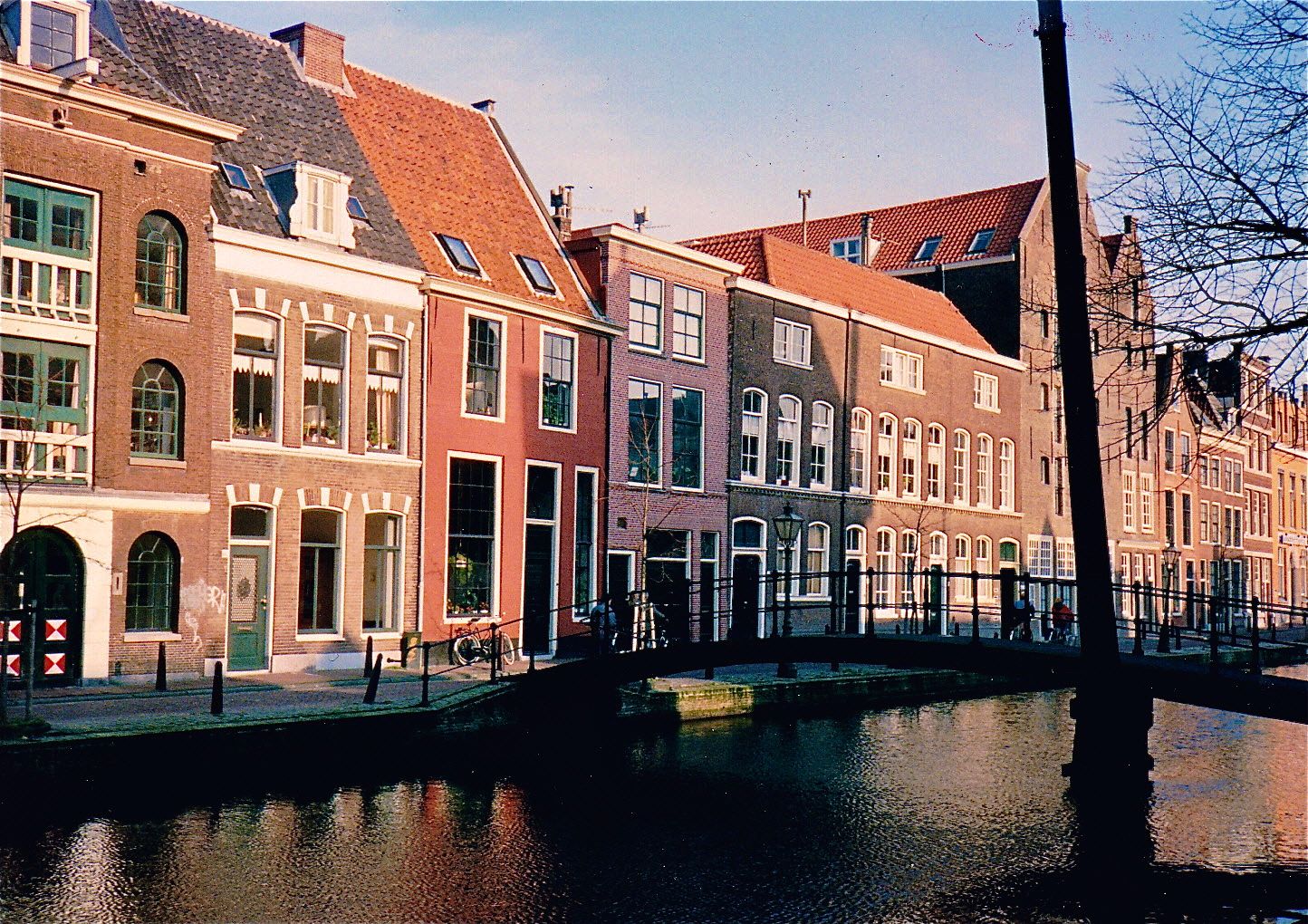
One of Leiden’s many canals.
© Stephanie Glaser

“Overgeven.” It’s a Dutch verb that translates as: “to vomit, barf, spew, puke.” It covers pretty much every way to expel your insides. And, really, it is one of the most effective verbs in any language, because when pronounced properly with a “guttural g,” the word sounds like what it is.  A global onomonopia. The result, indeed, sounds like heaving or at least clearing a stubborn popcorn kernel out of one’s throat.

Continue reading

“Suitcasing” it in France and sitting like luggage on the TGV

The TGV
© Sebastian Terfloth; Wikimedia Commons

There’s a reason college students and budget travelers go “backpacking” and not “suitcasing.” Big suitcases without wheels are awkward…very awkward —especially when you are running through the Paris metro trying, ultimately, to get to Gare de Lyon to make it to France’s fastest train, the TGV.

Continue reading

Ditching the Strollers in Bali

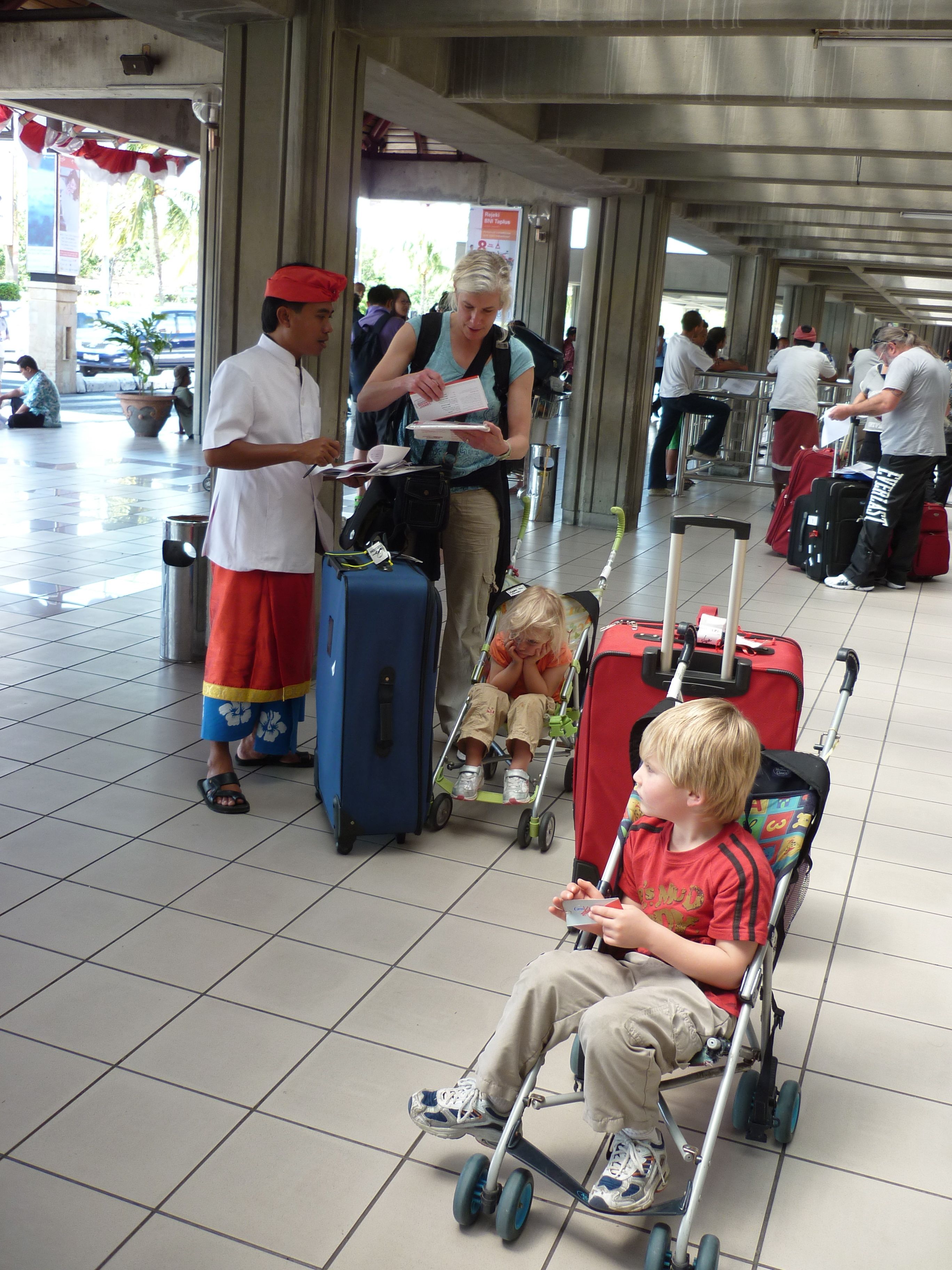
At the Denpasar Airport. No car seats
© Stephanie Glaser

No kid car seats. I convinced myself this was no big deal as I looked in the eight-passenger seat van that had arrived to pick us up at the Denpasar Airport. Calm down. This is Bali and things are a bit different here. I asked the driver, Waylan, if there were some seats lying around that needed to be set up.

“No, I am sorry, we don’t have car seats for the little ones,” Waylan said as he hoisted up my three-year-old daughter Kasey and tickled her chin. He then leaned over to give her five-year-old brother, Eddie, a high-five.

“They will be fine,” he reassured my husband Kurt and me with a smile displaying the most reflective set of white teeth I’ve seen aside from a Crest White Strips ad. “I am an excellent driver.”

Continue reading

Avoid the Oops

Using Embarrassing, Inappropriate or Offensive Words 

“I am very pregnant; I do not like beans.”

It’s easy to say the wrong thing when you’re in another country and dealing with a language barrier. Suzanne Miller, director of Nursing for St. Luke’s Wood River Hospital in Ketchum Idaho, knows this well.

While in college, Miller studied in Guadalajara, Mexico, where she had a mix-up with the Spanish word “embarazada,” which of course, sounds like embarrassed. However, it doesn’t mean embarrassed — at all.

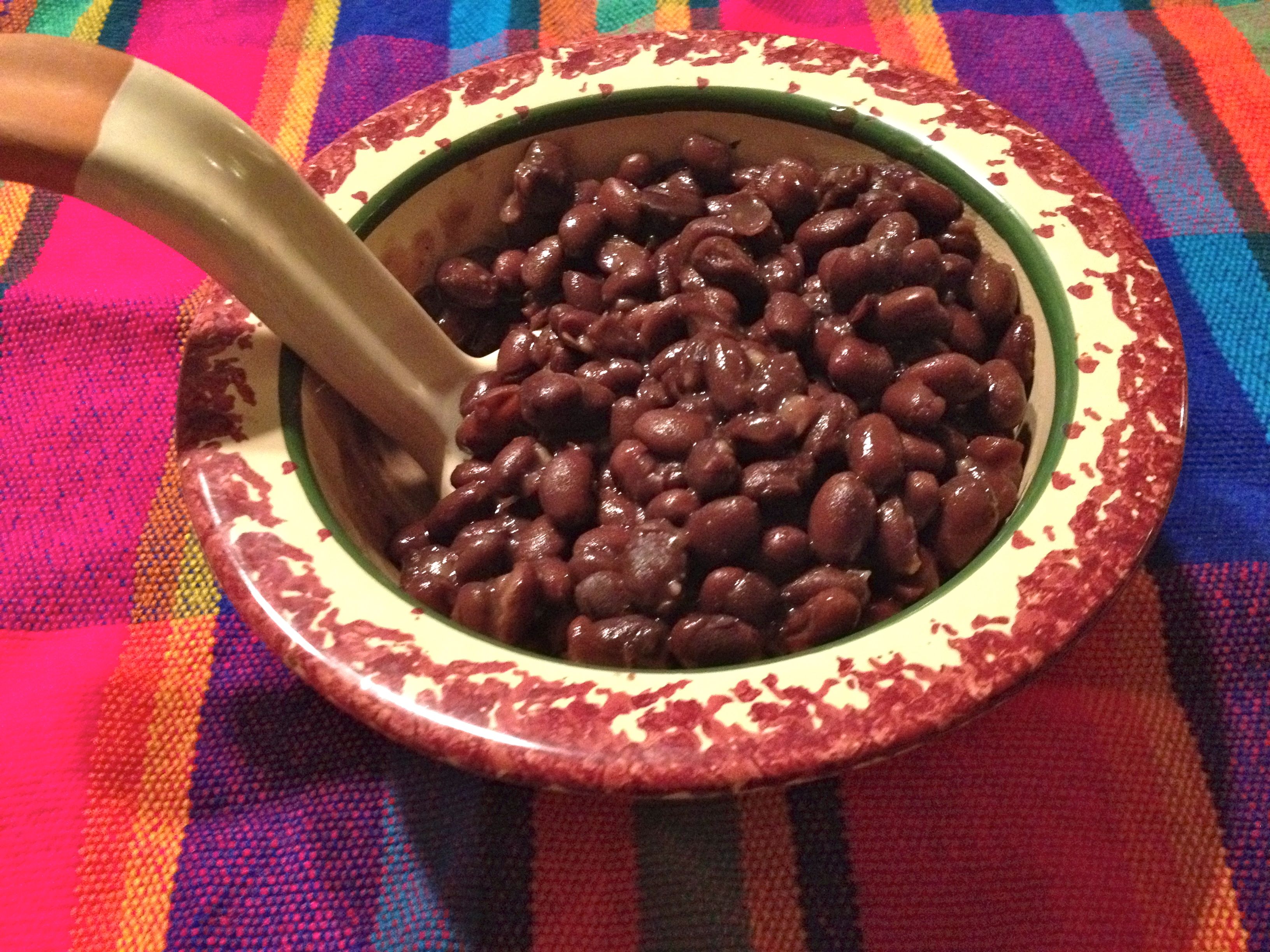
 “For two weeks, I didn’t eat my meals because they always included refried beans. Finally, my host mother asked me [in Spanish] “Do you not like my cooking?’ So then I said  [in Spanish], ‘I’m so, so embarazada, because I don’t like beans.’ My roommate, Jen, was fluent in Spanish and told me, ‘You just told Señora that you are very, very pregnant.’ Senora was stunned at first but Jen eventually cleared it up.” — Suzanne Miller.

To avoid issues with communication, many US travelers head to the UK, Australia and New Zealand because these countries share the same language as the US. Or do they? Can you say the wrong thing in your native tongue when you are traveling in an English-speaking country? Absolutely! Slang varies from dialect to dialect.

Continue reading

Silos, Cows, Poppy Fields and Ukrainian Soldiers with AK-47’s

© Edward Schuck

Cows, silos, barns, and cornfields. Count these as the main sights of a trip I took in 2006. One would think this place was Iowa, Wisconsin or my home state of Minnesota. Nope. I was in Ukraine looking at fields of corn and pastures of cows. Lots of fields and lots of cows.

Ukraine has long been considered the breadbasket of Europe, and so is the region from where I hail. While it was a nice coincidence, being in breadbasket turf, even in another country, was not necessarily what I wanted to experience. One of the main ideas behind travel is to visit places and appreciate cultures that are different from your own.

Continue reading

Don’t Mess with Magpies

A magpie flies over its rightful turf — the Alberton Oval, home of the SANFL Australian Rules Football Team, the Port Adelaide Magpies.

Magpies, it seems, are iconic and demonic at the same time. In the past, they have been viewed in Chinese culture as birds who bring good luck and joy. In many Western cultures, the magpie has had more sinister qualities and has even symbolized evil like its cousin the raven.

This good vs. evil framework works well in sports. Magpies are often mascots for athletic teams (e.g. the Australian Rules Football teams, Victoria’s Collingwood Magpies and the South Australia National Football League’s Port Adelaide Magpies just to name a few.) Scavengers and survivors, magpies are quite intelligent and definitely deserve a certain amount of respect.

Continue reading

In Greece: Learning the Metric System and How to say “Please”

On our way to the market in Naxos.
© Stephanie Glaser

“What do you want?” a small voice asked from somewhere near the deli counter where I was standing in a 7-11esque convenience store in Naxos, Greece.  The question was definitely more a demand for information than an exercise in customer service.

I peered over the counter and spotted a skinny eight-year-old Greek boy in neon board shorts and a faded tank top with “I’d Rather Be Surfing – Greek Isles” peeling off the front.  He emerged from behind the counter because a shelf topped with various sausages and soft cheeses obscured his view.

I looked around for an adult proprietor.  An older woman with a tight bun, dressed in a loose-fitting floral sundress, sitting by the cash register seemed to fit the bill. A young girl wearing the same patterned sundress counted change next to her.  Meanwhile, the proprietor read what appeared to be a Greek tabloid.

The boy, however, moved directly in front of me. Despite the fact that I could have placed my beach bag on the top of his head, he was an intimidating presence with his arms crossed against his chest. Tapping his fingers along his tiny bicep, he waited for my response. It didn’t take body language fluency to figure out that this kid was irritated.  Indeed, it was evident — he would rather be surfing.

Continue reading